A popular beam dismount in NCAA gymnastics is the gainer layout full off the side of the beam. Valued at a C, it’s favored because it can be connected to dance or acro elements for bonus and is generally easier to stick than forward-facing dismounts. But what separates the dozens of athletes performing this skill each weekend? In this article, I break down three examples of gainer full dismounts, highlighting common flaws and potential deductions. While judges typically only take off for clear form breaks, poor landing positions, or non-stuck landings, many additional deductions could apply.
Here are the most common deductions judges could take:
- Arch or piked body position (up to 0.2)
- Incomplete twist (up to 0.2)
- Posture on landing (up to 0.2)
- Insufficient height (up to 0.3)
- Pike down (up to 0.2)
- Typical landing deductions for non-stuck dismounts (up to 0.4)
- Leg form deductions
- Direction of dismount (up to 0.1)
The Ideal: A gainer full should show a clear upward swing of one leg to initiate the flip, with the gymnast remaining square to the beam on takeoff. The hips should rise with noticeable amplitude, and the athlete should maintain a straight body line with clean leg and foot form before preparing for a controlled landing with the chest up. The full twist should be completed cleanly and fully rotated before the landing, with the gymnast finishing to the side of the beam and allowing for slight forward travel.
Gainer Full Dismounts
Good Example

Takeoff

Although not a deduction, the gymnast jumps and pushes her body out and away from the beam rather than flipping parallel to the beam as is intended in this skill.
Peak

Body position (0.05)
Leg separation (0.05)
Amplitude (0.1)
Descent

Pike down (0.05)
Landing

Posture (0.05-0.1)
The biggest technical problem in this skill is the lack of amplitude on the takeoff, where she uses her momentum to push herself away from the beam rather than up. This results in a lack of hip rise and amplitude, requiring a pike down and a low landing.
Great Example

Takeoff
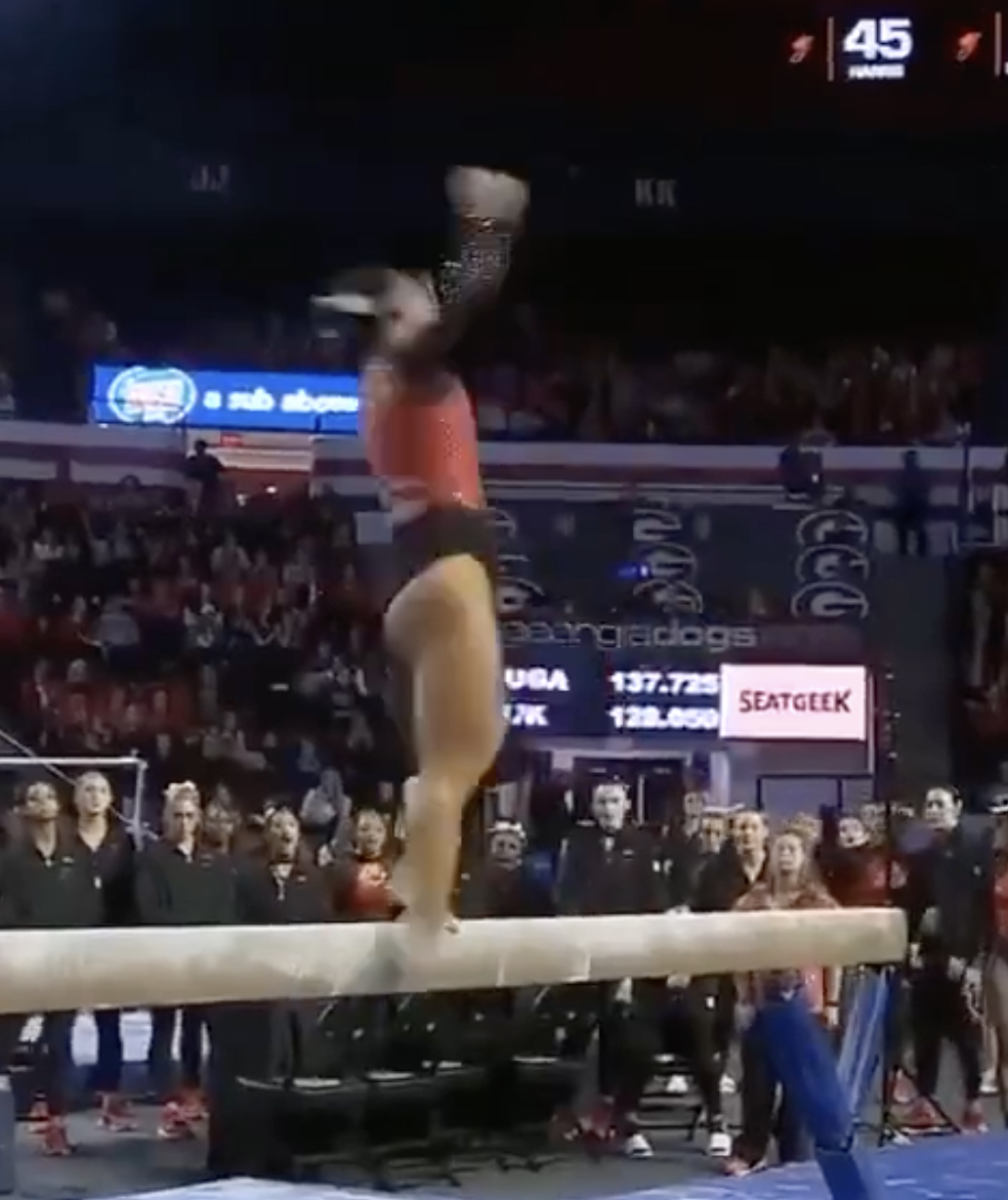
Although not a deduction, she does not swing her leg up above the beam, which limits her height and pushes her flip backward rather than upward and forward, as the skill is intended.
Peak

Height (0.1)
Descent

Pike down (0.05)
Landing

Body posture (0.1)
In this example, the gymnast has clean form, but again, her lack of amplitude causes additional deductions on her landing and requires her to pike down.
Excellent Example

Takeoff

Peak

Descent

Landing

This dismount floats nicely, and the gymnast is able to easily execute the full twist with plenty of time to prepare for her landing. Compared to the previous examples, this gainer full has a square, strong jump and leg swing off the beam.
READ THIS NEXT: Judge’s Inquiry: Good vs. Great vs. Excellent Floor Front Double Fulls
Article by Rhiannon Franck
Rhiannon Franck is a former national-rated NAWGJ women’s gymnastics judge with over 15 years of USAG judging experience and nine seasons judging NCAA gymnastics.