
A switch leap half on beam is a difficult yet popular leap. It fulfills the leap requirement, is worth two-tenths in difficulty bonus, and can be connected to other jumps to rack up additional connective bonus. It also helps meet the “up to the level” difficulty compositional requirements. This skill is extremely technical with kicks, switches, splits, and turns all in one skill. Besides the obvious balance errors on the landing, what do judges look for in this skill? Below I’ll break down three examples of different switch halves, pointing out some of the most common deductions judges can take, if they catch it in real time.
Here are the most common deductions judges could apply:
Up to one-tenth:
- Incorrect body posture/alignment
- Precision—lack of a definite arm/leg position
- Failure to land with feet together on leaps/jumps to two feet
- Insufficient height of leg swing (minimum of 45 degrees)
- Incomplete turn
- 0.05-0.1: 1 degree to 45 degrees missing
- Devalue the skill if more than 45 degrees are missing
Up to two-tenths:
- Insufficient height
- Insufficient split
- Legs not parallel to the floor
Up to three-tenths:
- Bent legs
The Ideal: The gymnast should extend the leg at least 45 degrees forward. The leg should swing backward while the half turn is initiated with an 180-degree split shown at the apex of the jump. The gymnast should float over and down the beam, bringing the legs together in a controlled landing with an appropriate body posture.
Beam Switch Half
Good Example

Take-off
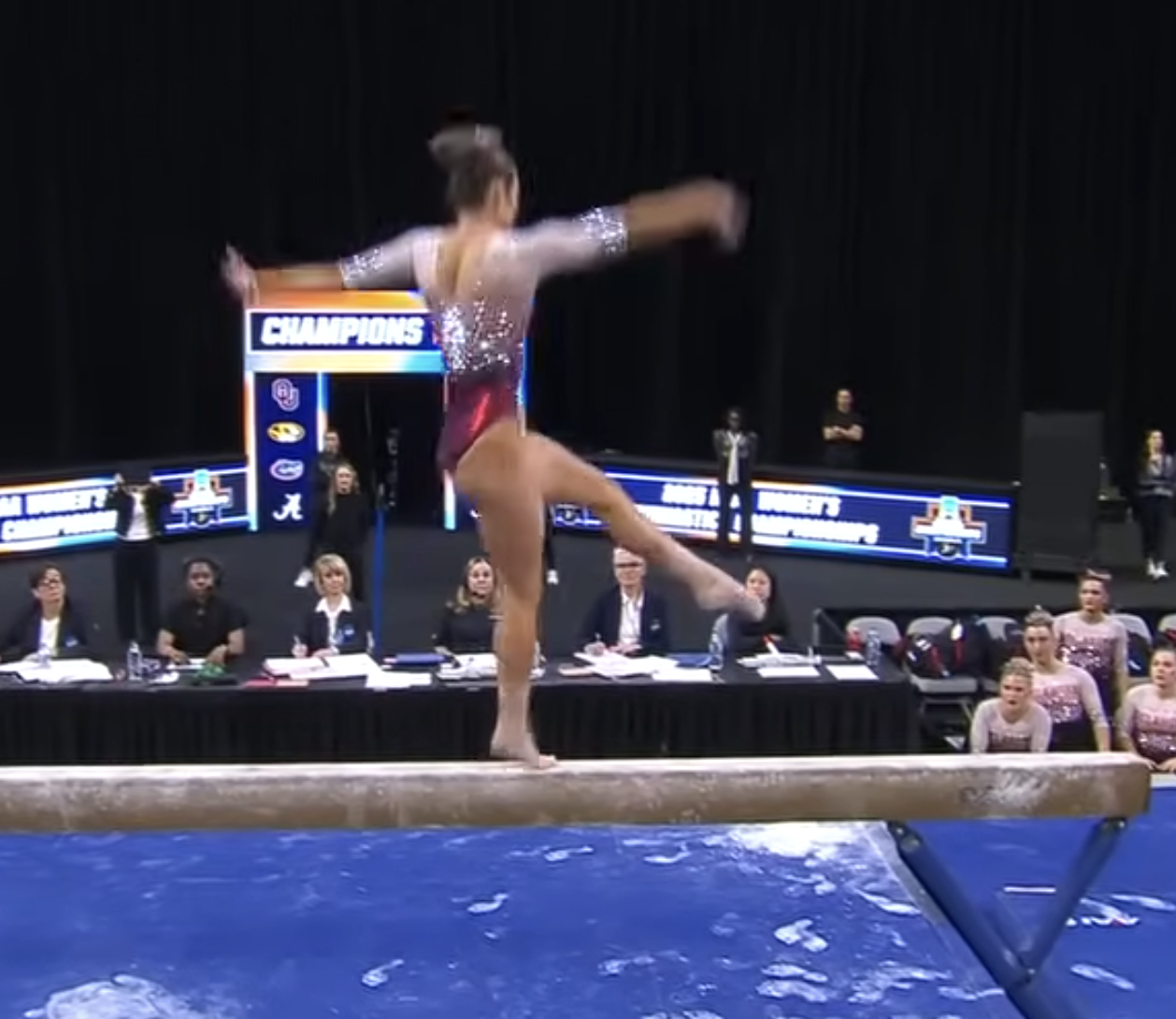
Leg bend (0.05)
Split

Uneven/incomplete split (0.05)
Amplitude (0.05)
Landing
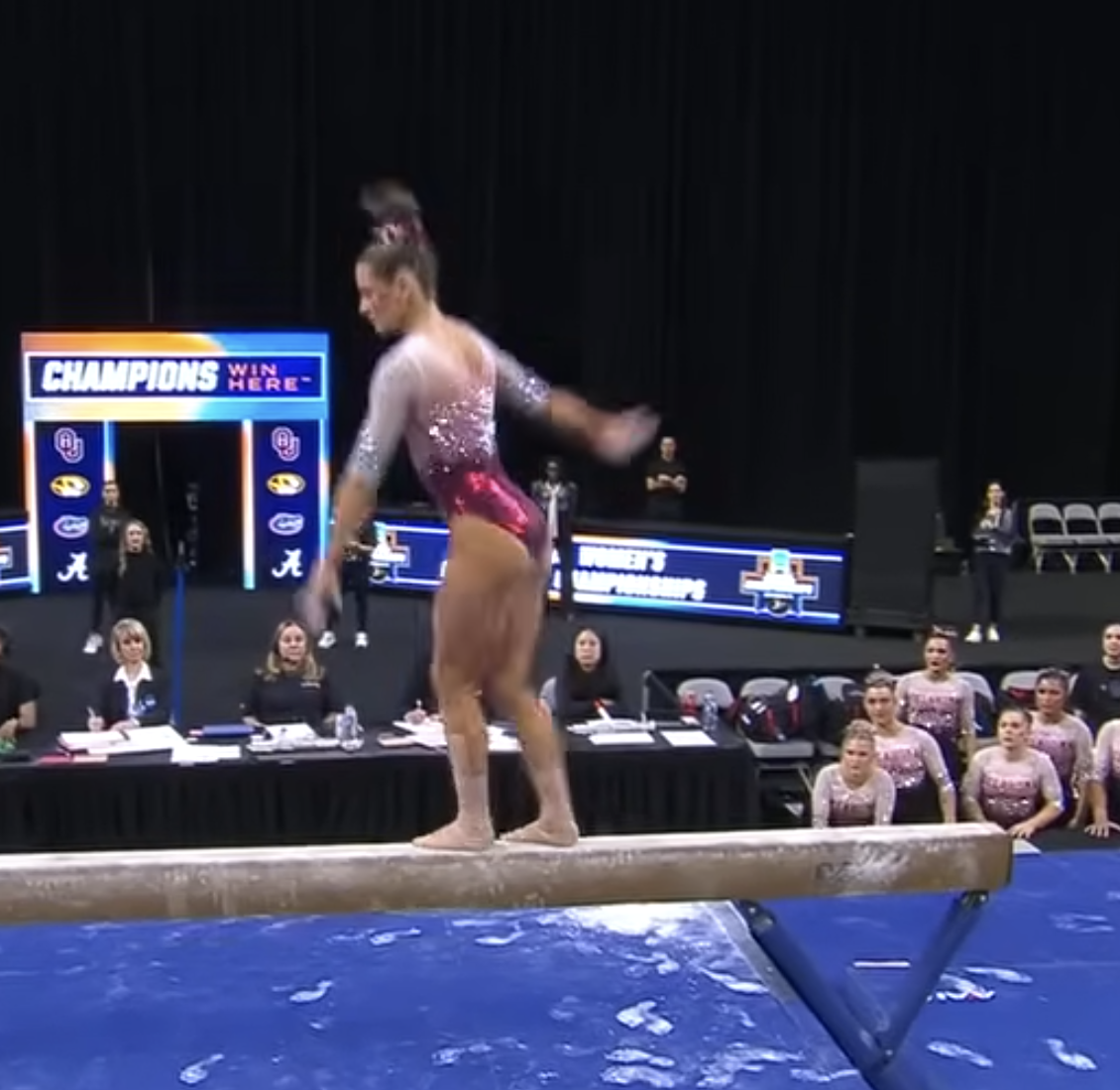
Incomplete turn (0.05)
Watching in real time, this leap looks great and without deduction, but if you really break it down, you can see her lead leg is bent on the switch and her front foot is noticeably turned in when she lands, indicating she didn’t fully rotate the half turn. I would also consider an amplitude deduction since her hip rise and distance down the beam could be increased, especially compared to some of the next examples.
Great Example

Take-off

Foot form (0.05)
Split

Amplitude? (0.05)
Landing
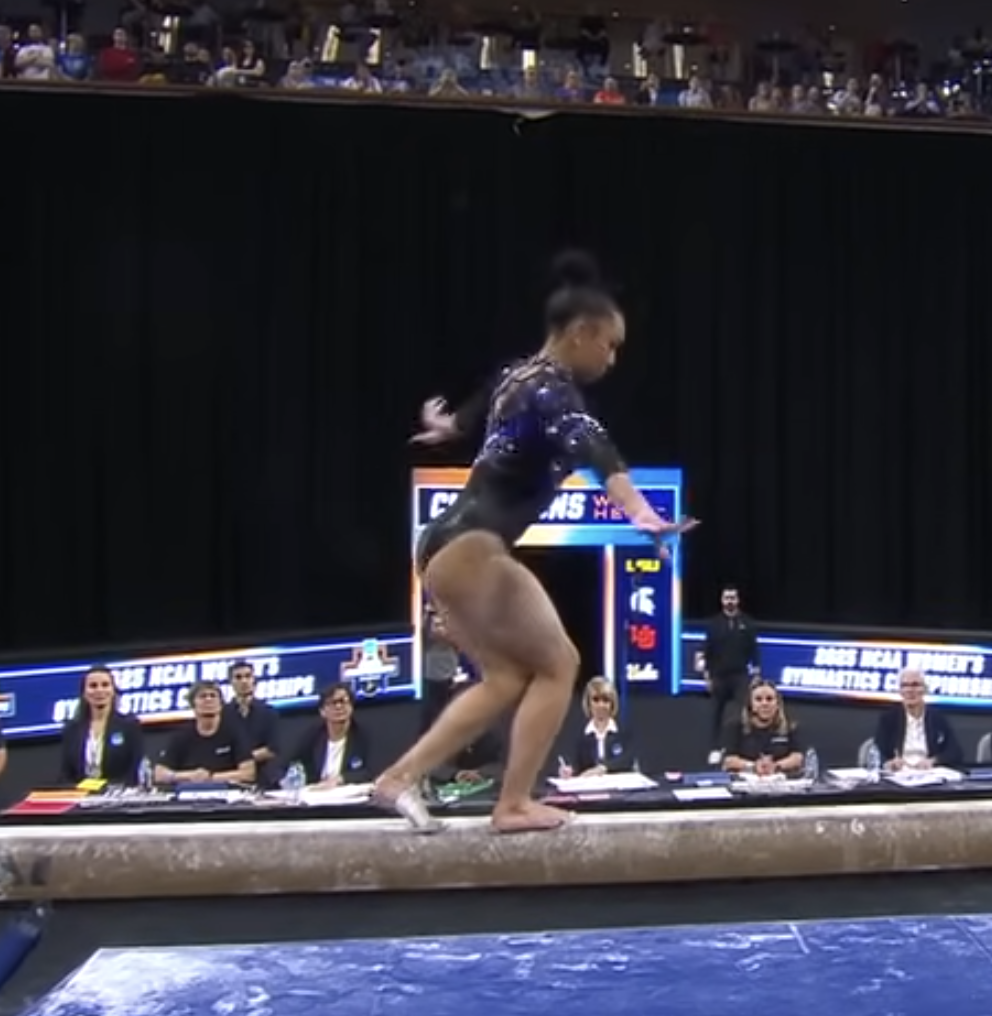
This is a beautiful leap with great extension and a very fast switch and split. Because of her speed, she is able to easily complete the leap without even needing much height; you can see her leap hardly travels down the beam and her hips don’t rise very much. I doubt many (if any) would take an amplitude deduction, but when you compare it to the example below, you can see why I pointed it out.
Excellent Example

Take-off
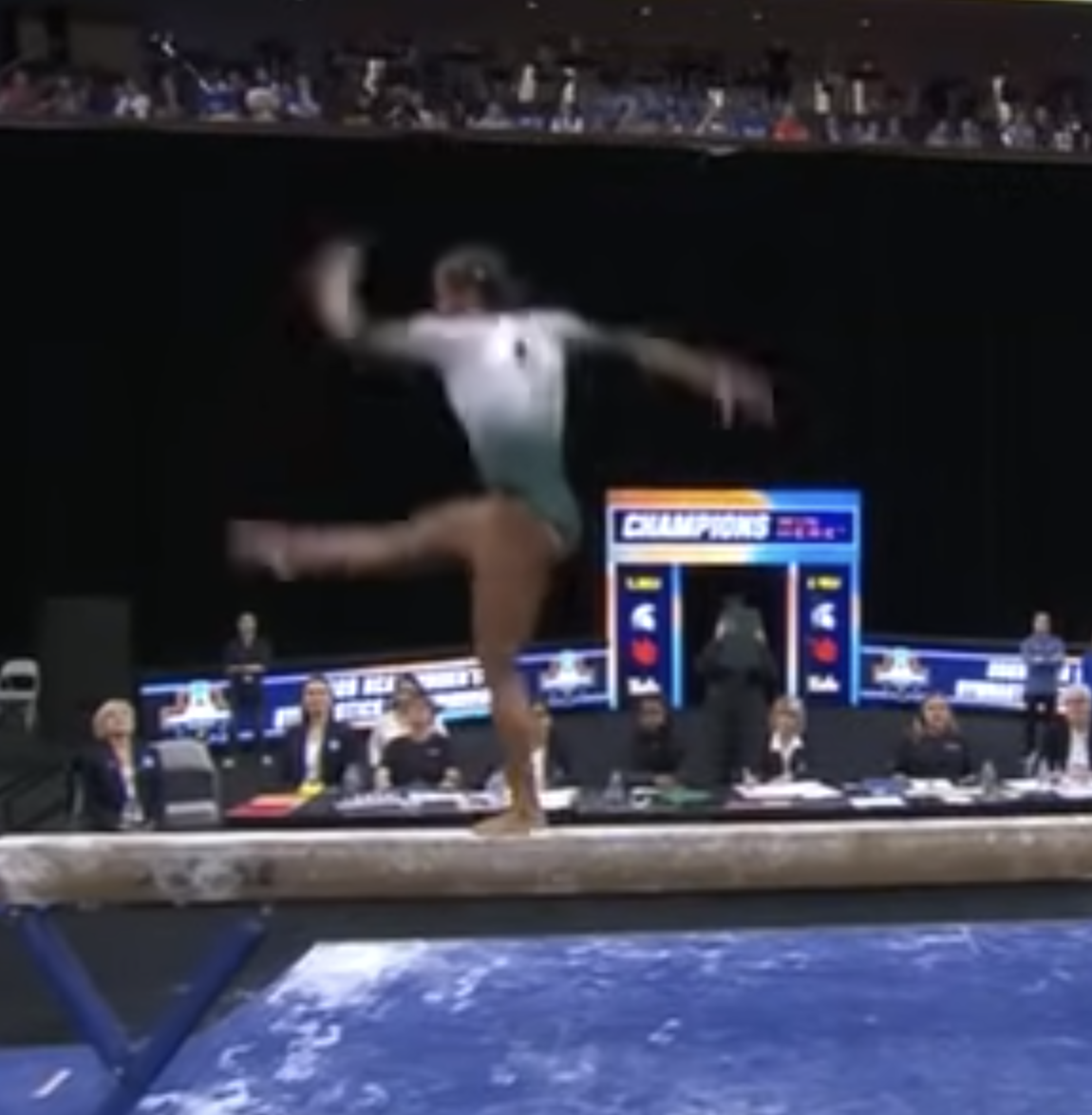
Split

Landing

Yes, she wobbles on her landing, but her front leg swing, amplitude, split position, timing, and rotation are all exemplary.
READ THIS NEXT: Major Changes Coming to National Qualifying Score in 2026
Article by Rhiannon Franck
Rhiannon Franck is a former national-rated NAWGJ women’s gymnastics judge with over 15 years of USAG judging experience and nine seasons judging NCAA gymnastics.