

Double Layouts off the uneven bars are one of the most popular dismounts in NCAA gymnastics. Valued at an E, this skill meets the compositional difficulty requirements for bars and is worth two tenths in difficulty bonus toward that all-important 10.0 start value. But what separates a good and excellent double layout, and how much should judges be taking on those that are less than perfect?
Here are the most common deductions judges could apply:
- Landing too close to the bar on dismount (0.1)
- Leg separation (up to 0.2)
- Failure to maintain stretched body position (up to 0.2)
- Incorrect posture on landing (up to 0.2)
- Insufficient exactness of stretched position, arch or pike (up to 0.2 each time)
- Bent legs (up to 0.3)
- Insufficient height (up to 0.3)
- Steps, shuffle on landing (up to 0.4)
In this article, I’ve selected three double layouts of increasing quality to showcase some of the most common deductions seen on this skill. Good, great, and excellent are all subjective ratings, and since I’d like to give examples of deductions, the “good” and “great” examples are purposely not perfect. To me, a “good” example is performed safely and is clearly credited as the skill. It will contain some amplitude, form, or landing deductions. A “great” example contains one or two major or minor deductions or flaws, but is still well-performed. It’s selected to be better than good but not quite excellent. The excellent example has no deductions and exemplary form and amplitude.
The Ideal: On release, the body should be straight and continue rising through the first flip, with good leg form and open hips. The gymnast should maintain a stretched body position throughout the flip and as they prepare to land. The gymnast should land with their chest up and slightly forward, knees bent, and feet less than hip-width apart.
Double Layout Dismounts
Good Example

First flip
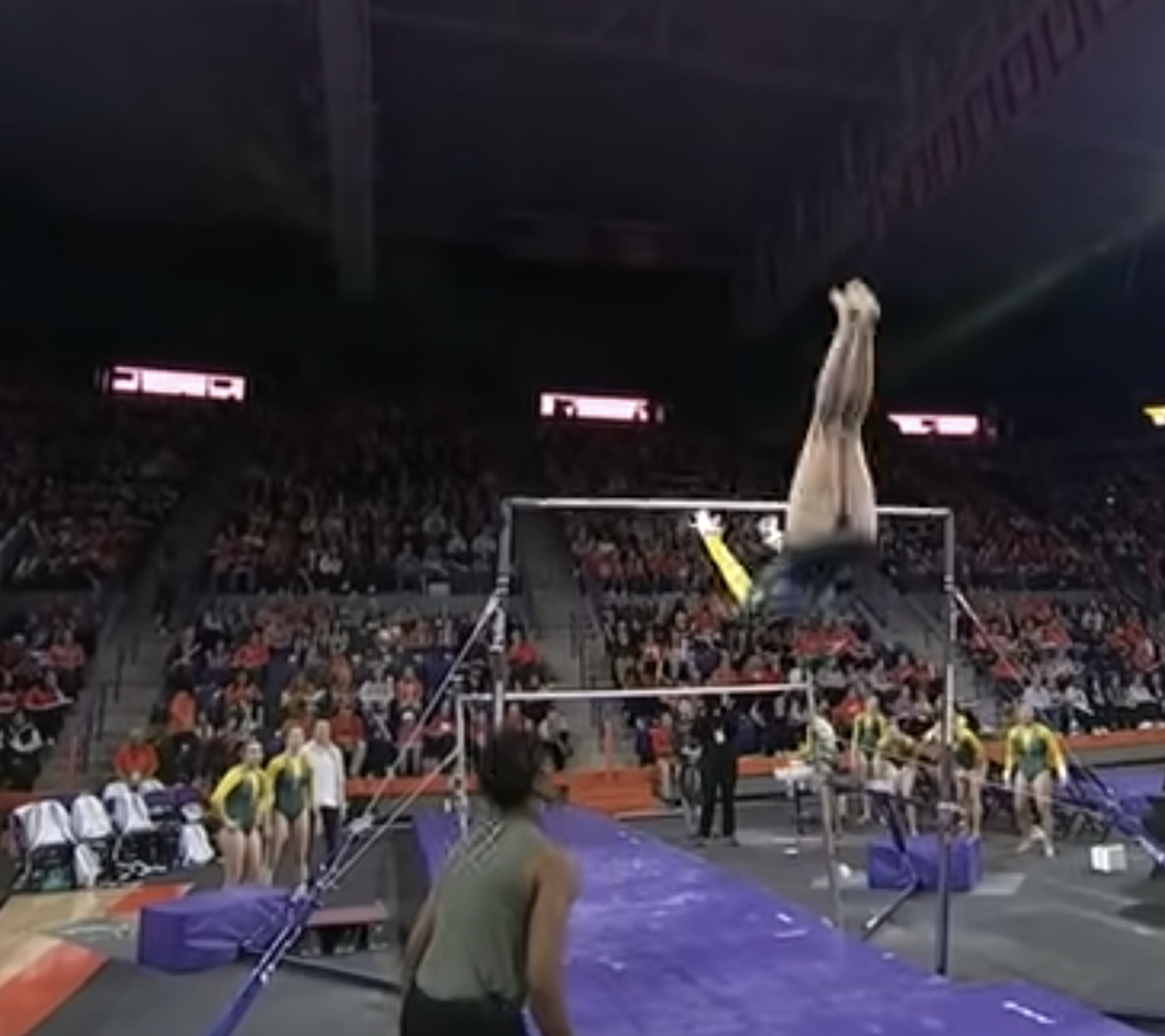
Amplitude (0.15)
Body position (0.05)
Leg form (0.05)
Foot form (0.05)
Second flip
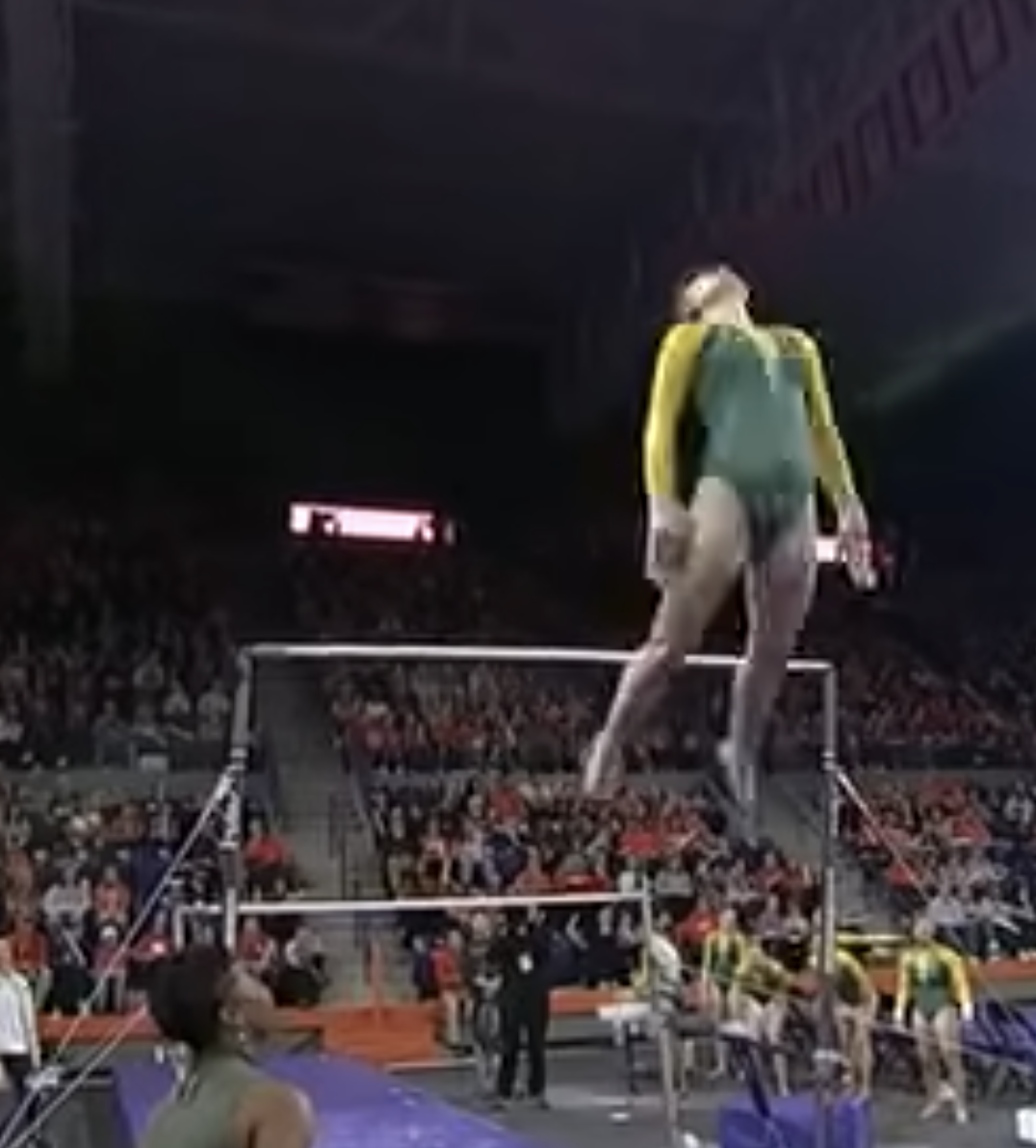
Leg separation (0.1)
Landing preparation

Pike down (0.15)
Landing
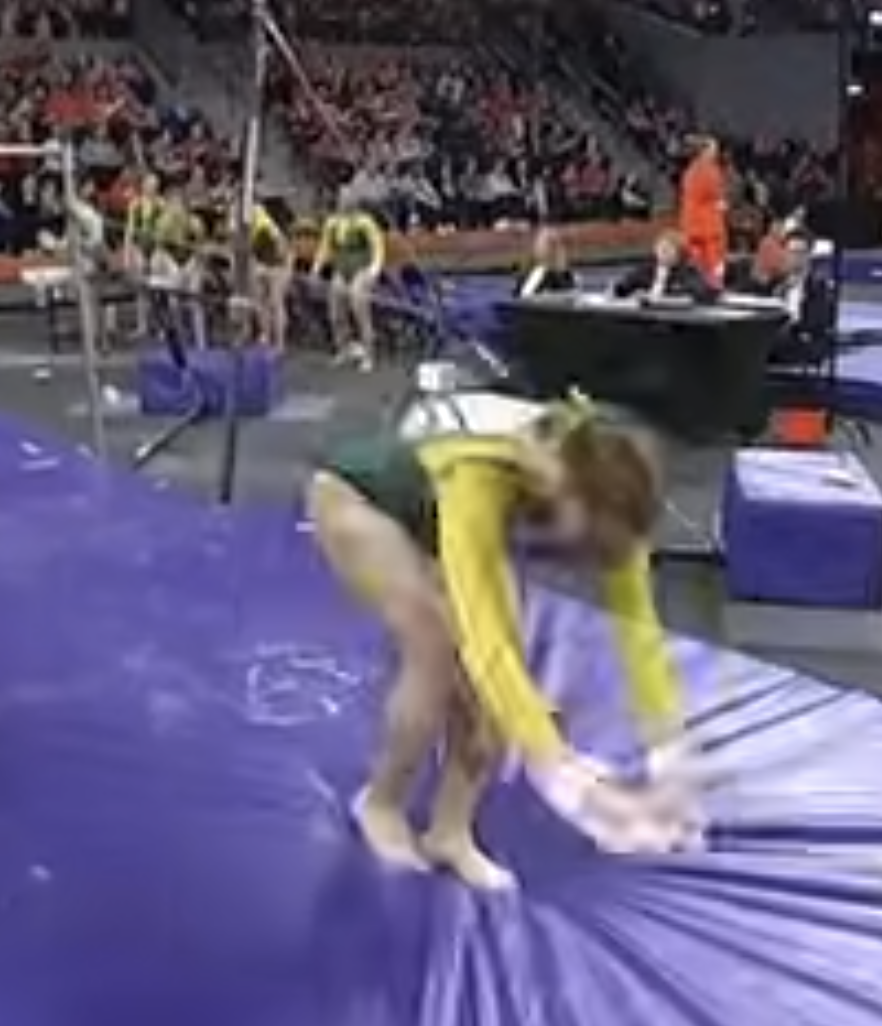
Body position (0.15)
Step forward (0.1)
This double layout has some noticeable form errors, and the deductions can add up quickly. Technically, she releases the bar early, which causes a cascade of deductions, including amplitude, a pike down, and a low chest on the landing. One way you can tell if the release was early is if you hear or see large vibrations from the bar after the gymnast releases.
Great Example

First flip

Body position (0.1)
Second flip

Landing preparation

Pike down (0.1)
Landing
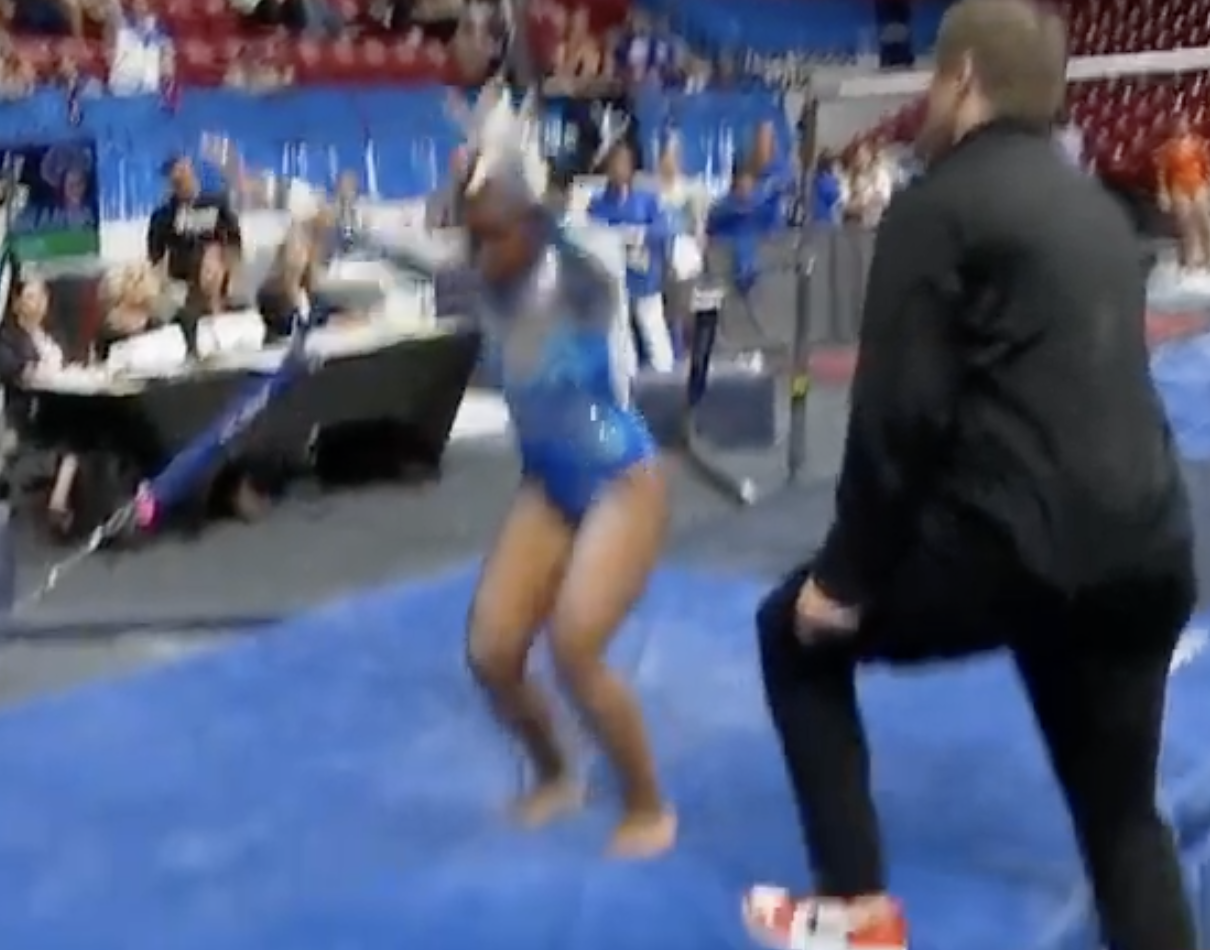
This is a clean, well-rotated double layout, especially given the direct connection out of the toe circle. The gymnast does have some clear form breaks and a pike down, though, which should be deducted. However, her amplitude, leg form, and landing position are all great.
Excellent Example

First flip

Second flip

Landing preparation

Landing
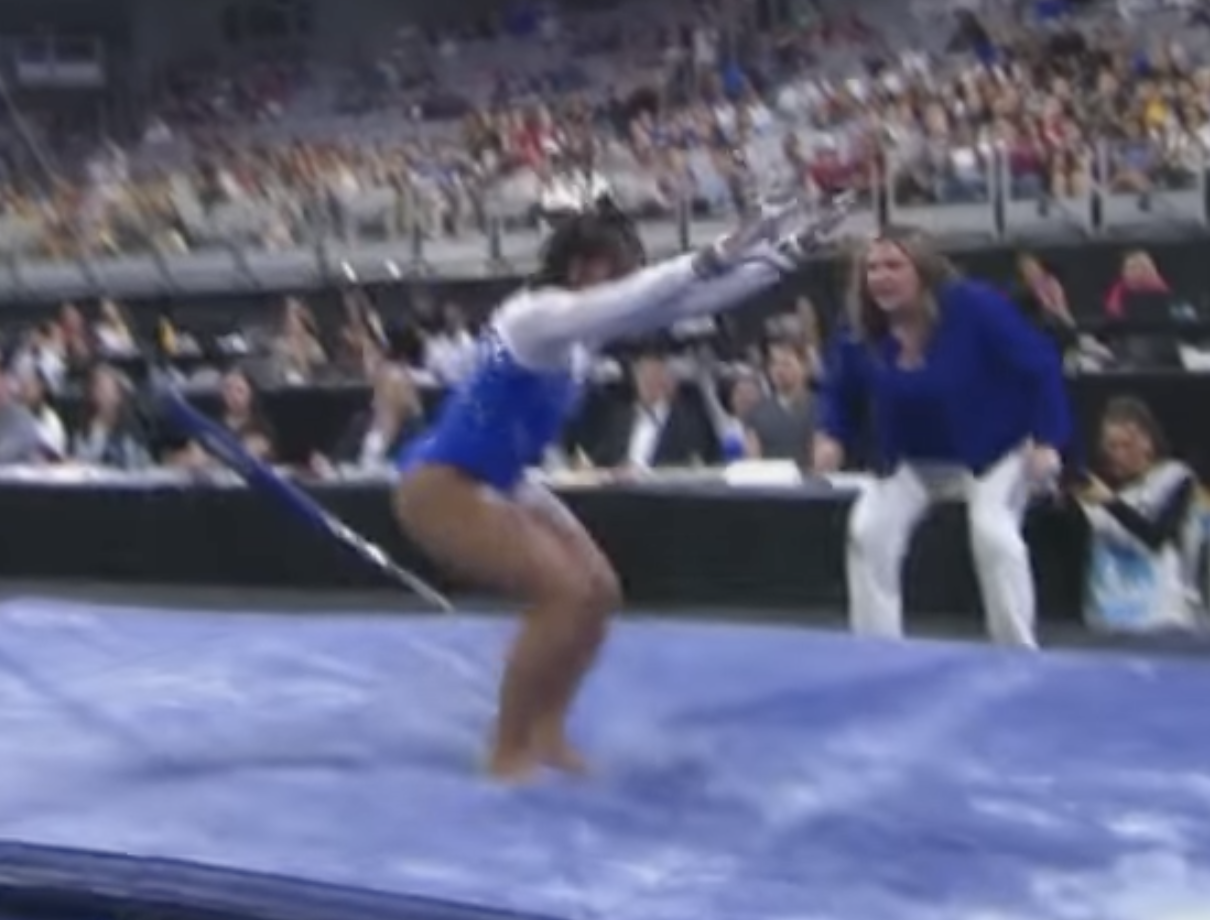
This beautiful double layout and textbook landing are everything a dismount should be: clean, floaty, and effortless.
READ THIS NEXT: Judge’s Inquiry: Good vs. Great vs. Excellent Cat Leaps and Beat Jumps
Article by Rhiannon Franck
Rhiannon Franck is a former national-rated NAWGJ women’s gymnastics judge with over 15 years of USAG judging experience and nine seasons judging NCAA gymnastics.



I was lucky enough to see that last example in person and I literally gasped. It was just SO beautiful. Sometimes you don’t realize just how many deductions most executions of a skill should have taken until you see one that perfect.