With college students going back to school, that means gymnastics season is right around the corner. The new 2026 NCAA Gymnastics Rules and Modifications are out, and we highlighted the most notable changes below. Interestingly, the vast majority of the changes have little to do with how the sport is actually evaluated or performed and everything to do with the roles, responsibilities, and behavior of judges and coaches.
General: Judge-Related
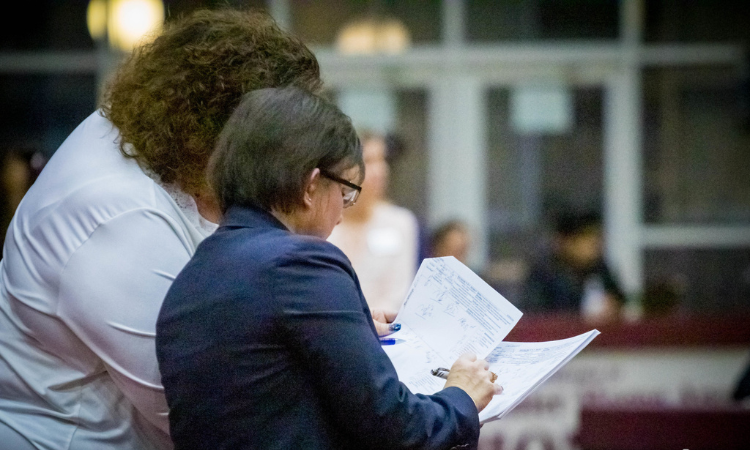
The most significant change this year is that either judge—the panel judge or the chief judge—can now call a judge’s conference. Previously, only the chief judge could do so, which meant that if the chief judge miscalculated a score, start value, or final tally, a panel judge had no authority to challenge the mistake. While this update may lead to more conferences overall, it should also result in more accurate scoring and fewer impossible start values or totals. In fact, an impossible score—for example, a 9.95 on a Yurchenko full with a step on the landing—is now considered valid grounds for a conference. Conferences may also be initiated for scores out of range, misapplied “up to the level” (UTL) deductions, or incorrectly input scores.
Other changes include an expanded affiliation policy for judges, which more clearly defines who is considered affiliated and for how long. The duties and responsibilities of meet referees, previously in a separate document, are now incorporated directly into the rules and modifications.
Behavior standards and duties for NCAA judges have also been broadened. For the first time, judges are subject to an NCAA-specific social media policy that builds upon the existing NAWGJ policy. Additional rules cover use of cellphones, footwear, watching warm-ups, and interactions with athletes, coaches, or spectators—expectations that extend beyond the act of judging itself. Breaches of these standards may result in “disciplinary action,” though the rules do not specify what those actions could entail or who, beyond peer reporting to the national assigner, will be responsible for enforcement.
General: Coach-Related
The rules modification now gives examples of what does and does not qualify for a yellow card for a coach and outlines the procedures to follow after issuing a yellow card. Hopefully, this will encourage judges to use the yellow card when appropriate; however, judges may still be hesitant to issue one since coach evaluations are still completed for each official.
Coaches can now file an inquiry if scores are out of range. Previously, inquiries were allowed for start value errors or neutral deductions only. Theoretically, a score should not be posted with the panel’s scores out of range because judges could conference and adjust their scores to be in range prior to the score being posted. However, in the event that a score is posted with out-of-range scores, coaches can file an inquiry to prompt judges to confer and correct the score.
READ THIS NEXT: Judge’s Inquiry: Good vs. Great vs. Excellent Switch Side Straddle Fulls
Article by Rhiannon Franck
Rhiannon Franck is a former national-rated NAWGJ women’s gymnastics judge with over 15 years of USAG judging experience and nine seasons judging NCAA gymnastics.